The Rooms of Our Childhood
For each of us, there comes a time when as a child, we make the momentous journey from the insular familiarity of family to the community of an elementary school. Because my father was a career Air Force officer, the elementary schools that I attended were located within the bounds of the military base at which my father was currently stationed. Whenever he was reassigned in a new location, my sisters and I changed not only houses, but schools as well. Thus, when September rolled around, my classmates were a totally new population.
Then, in 1958 my father was transferred to the Pentagon and for the next four years, I experienced life in a classic American suburb. Our home was in the northern Virginia community of McLean, not far from Washington, D.C. My 8th grade year, I attended a relatively new high school with a mixture of kids—some new to the area like me, and others who had lived in the same neighborhood and attended school together since kindergarten.
For me, the perennial new kid on the block, the idea of attending the first eight grades with the same roster of kids in the same neighborhood school building was a concept I could hardly fathom. That first fall of my life in suburban America, I envied my new friendship circle their deep roots in the community and entered McLean High’s spirited academic world eager to fit in.
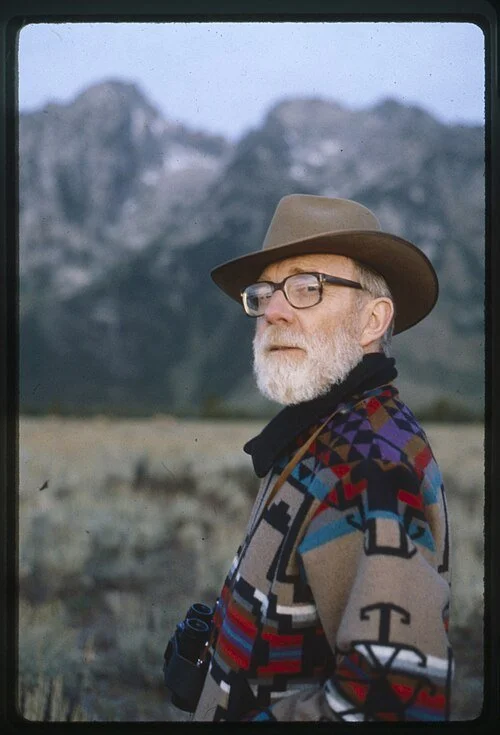
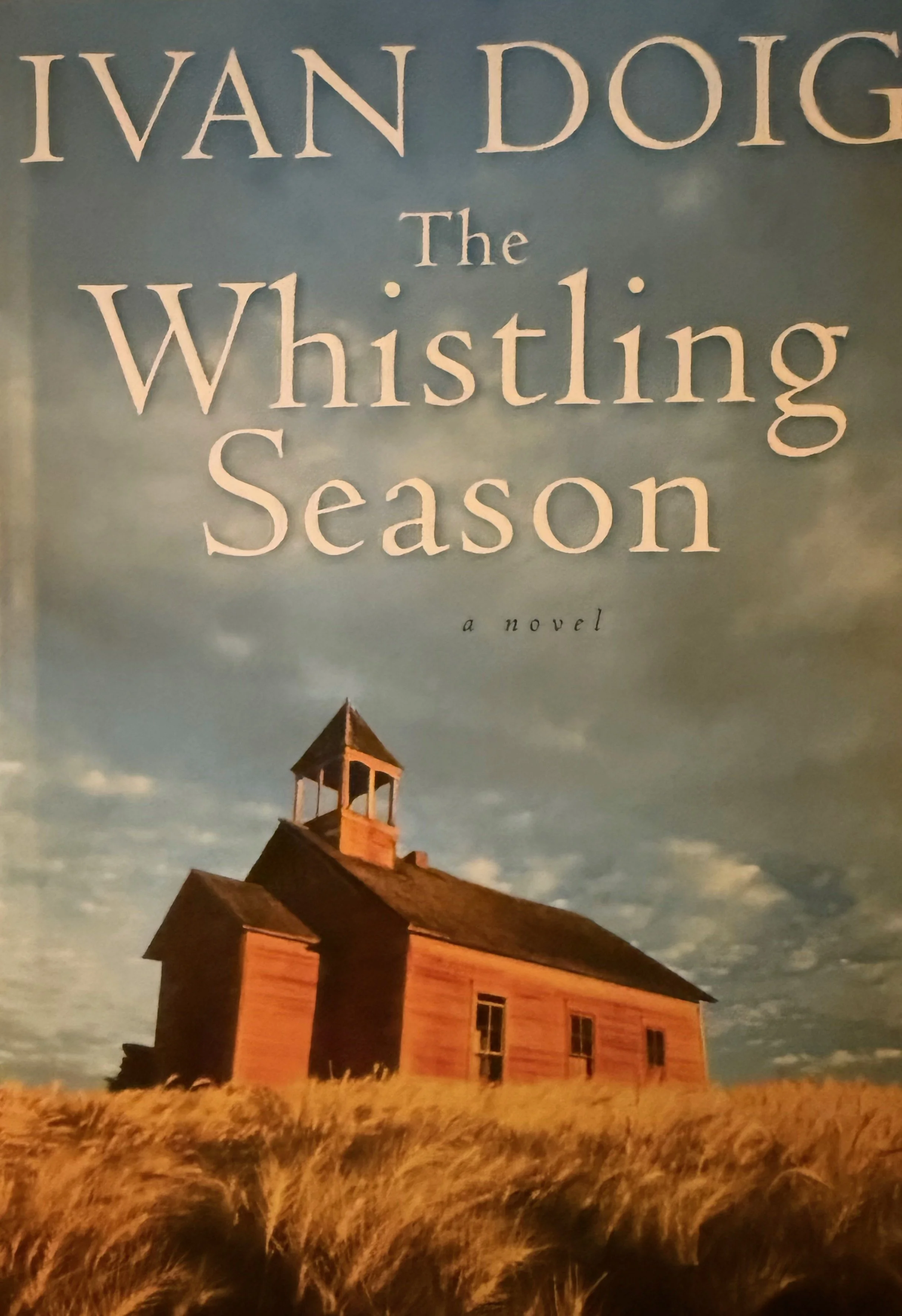
Looking for a book in my home library recently, I pulled out my copy of Ivan Doig’s The Whistling Season—a magnificent little gem that I first read in 2008. The author—a former ranch hand, newspaperman and magazine editor born in White Sulphur Springs, Montana—had the following to say in a conversation I recall listening to after the book’s publication.
“My narrator in The Whistling Season is Paul Milliron—an educator and bookman and graduate of a one-room school who would have understood the value of the word community, all the way from its linguistic beginning. In Paul’s well-thumbed Latin-to-English dictionary, these several meanings of communitas are given: sharing, partnership, social ties, fellowship, togetherness.” What better rewards, I remember thinking, could readers and writers alike ask for than the common ground of literary fellowship through reading.”
Reading Doig’s novel again, I recall my own early school settings where many of my life’s earliest lessons were learned. In The Whistling Season, Paul Milliron points out that the Marais Coulee schoolyard of his seventh-grade school year (1909-1910) was divided like a continent of “brawling nationalities”—the Slavs (the Stoyanovs and Drobney brothers) don’t get along with the Swedes (the Johannsons and Myrdals), and the proverbial bully (Eddie Turley) doesn’t get along with anyone. In this one-room community comprised of the children of Montana dryland farmers, immigrants, and migrant project people, “grudge fights” took on the status of “nationality brawls.”
While early twentieth century one-room schools were largely rural worlds unto their own, they also offered children a window on a larger world through the subject of geography. In the opening pages of The Whistling Season, Paul, at the age 13, is sitting with his father and two younger brothers at the kitchen table. Doig points out that Paul is doing his geography assignment.
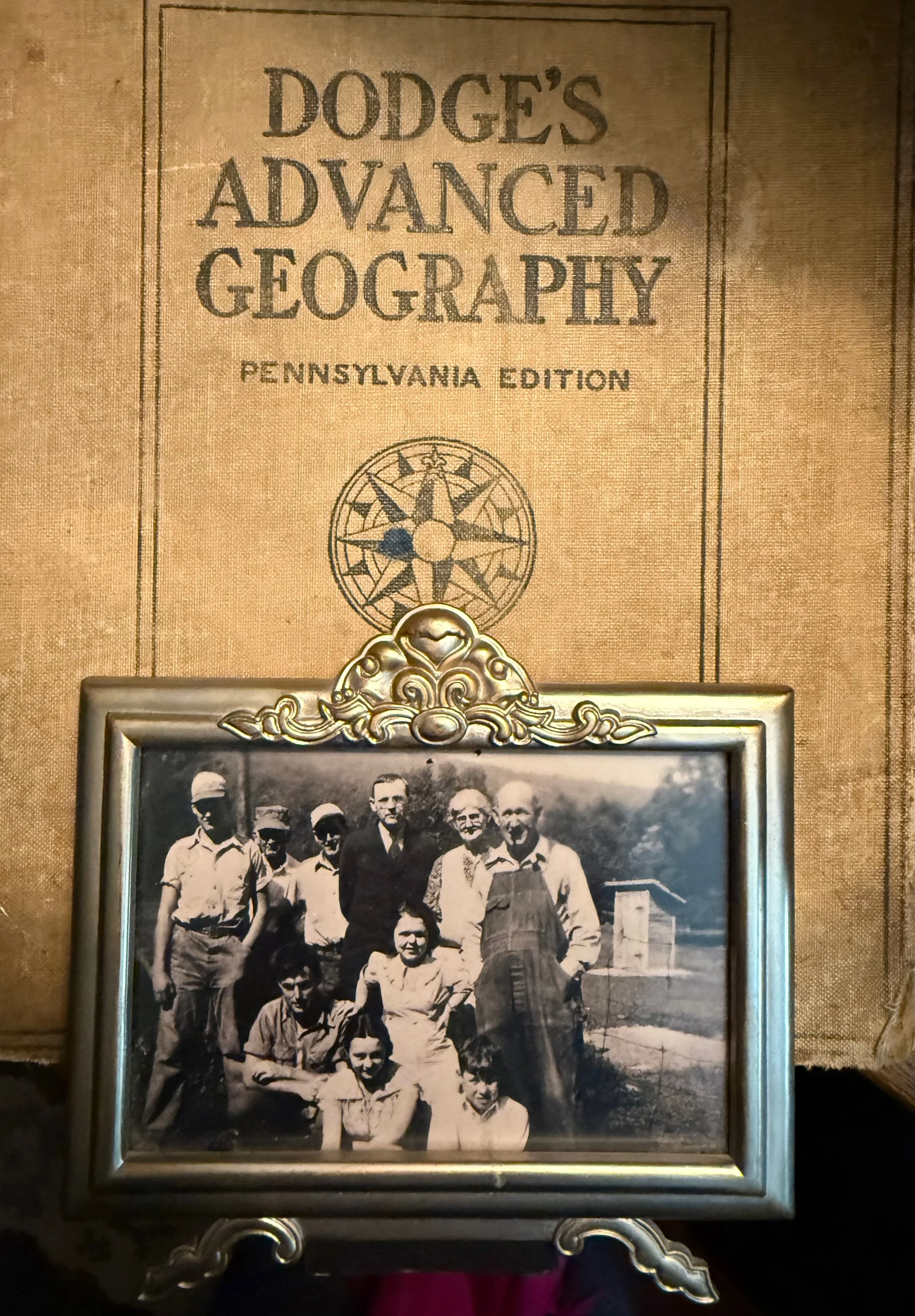
In 1987, my father sent me a 1915 Pennsylvania edition of Dodge’s Advanced Geography, first published in 1904 by Rand McNally & Co. Paul may very well have been studying from an earlier Montana edition of the same geography text. In an attached note, Dad explained that his older brother Bob wanted Kit and me to have it.
In his note, Dad recalled, “It was issued to your Uncle Bob around 1917 at Cooney Town, a one-room school in West Finley Township, PA—not too far from Wheeling, WV. Bob (82), along with his brother Harry (87) and sisters Hazel (90) and Pansey (84) were four of the fourteen students in the one-room school—eight grades. I remember spending hours poring over this book, more than 50 years ago. The pictures leaped off the pages when I looked at it again last week. Geography was a major part of our curriculum in those days, along with arithmetic, history and grammar.”
Dad’s 1987 recollections of the worlds within that well-thumbed 1915 geography book are mirrored by Paul in The Whistling Season when as Montana’s State Superintendent of Schools, he returns home in 1957 to Marais Coulee, faced with the dilemma of having to determine the fate of the state’s one-room schools.
“Childhood,” Paul reflects as he ponders his decision, “is the one story that stands by itself in every soul…. As surely as a compass needle knows north, that is what draws me to these remindful rooms, as if the answer I need at the end of the day is written in the dust that carpets them.”