Kindred Spirits
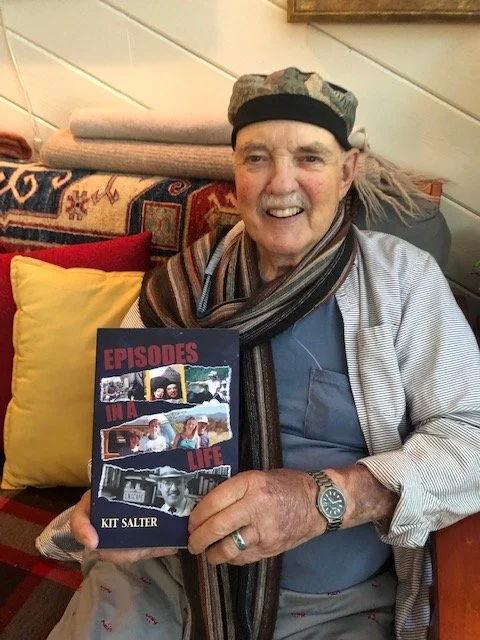
Kit published a memoir Episodes in a Life just before his 84th birthday. It is a joyous recollection of episodes in his long and amazing life—one filled with adventures and capers with his family and as an educator. Born in 1938, Kit loved life from the get-go, and in return, the various worlds he has negotiated as he passed through their portals. The fifth of five children, he grew up with a mother who was an activist focused on saving the world and a largely absent father. His three teenage sisters and brother often provided the ballast that kept his boat afloat at times when a child with less spirit and spunk might not have survived life’s challenges.
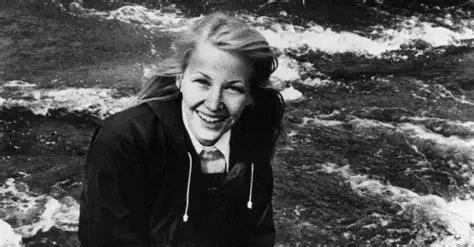
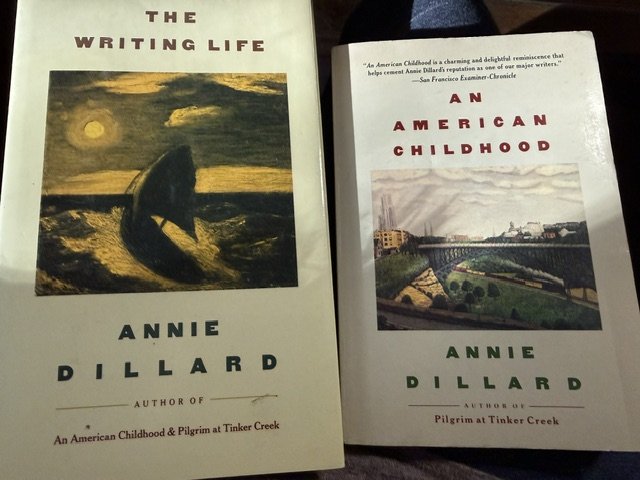
On September 16, 2026, writer Annie Dillard joined the constellation of authors who touched my life and Kit’s over the decades. Born just a month before me, she published Pilgrim at Tinker Creek for which she earned a Pulitzer Prize at the early age of 28. In 1988, Kit and I moved to Missouri where we bought a house in the country that we named Boomerang Creek. It was there that I first read Dillard’s 1987 memoir An American Childhood and came to understand how one sees the world up close through the eyes of a child. Kit loves Dillard’s writing as much as I do.
One of the episodes Kit recounts in his memoir is entitled “Mother and the Tucson Caper.” It’s a memory of a childhood brush with fate that speaks volumes about how he has always dealt with life’s challenges. Kit recalls being about five when his family moved for a year in Palo Alto, CA while his father had a teaching assignment at Stanford. Like the world that writer Annie Dillard recounts in her memoir An American Childhood, Kit’s accounts from that early time in his own childhood are as crisp and sharp as if they happened yesterday.
He recalls the smell of orange blossoms encountered while exploring the backyards and edges of his new neighborhood in Palo Alto. One day he was drawn to a nearby storm channel that was always dry, except after a storm that sent powerful rain in torrents from nowhere. Storms and their effect on the landscape electrified his curiosity. He writes, “Watching it cascade by filled with storm runoff was always accompanied by the mute fascination one feels when dangerously close to barely controlled water flow.” Already, Kit’s inner geographer was alive with curiosity and a passion to observe the world unfolding around him. Eighty years later, that storm channel and its potential dangers remained etched on him memory and his memoir.
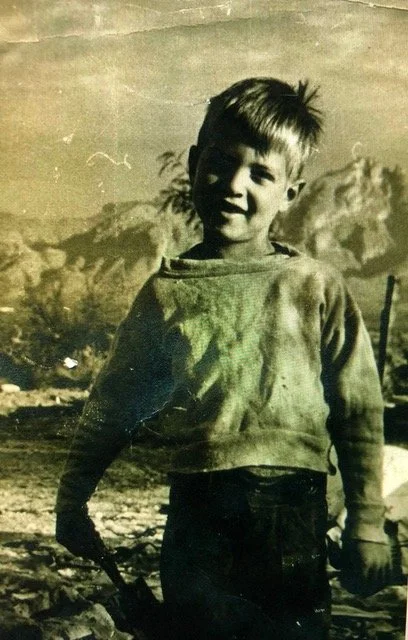
As a curious five-year-old living in Palo Alto, Kit had a serious medical brush with death. After eating a box of chocolates and inhaling dust while searching for something under his bed, he ended up at the Stanford University Hospital. Doctors found him in danger of expiring from the severity of the congestion caused by an asthmatic reaction to the dust and chocolate he had ingested in his body. Not willing to find out what might happen next, his mother snuck him out of the hospital wrapped in a blanket and bought two tickets on a Greyhound bus headed for Tucson, AZ where her friend activist Margaret Sanger told her Kit would have a better chance of surviving.
Mrs. Sanger made an adobe hut on the far outskirts of Tucson available for the sickly child, his mother and his 19-year-old sister Jean who came out to help. Within six months, Kit had gained 12 pounds and began a life almost free of asthma. During times when his mother was away and his sister Jean was at work at a local B-29 bomber airplane factory, Kit explored on his own for hours, collecting a few storied scars while thriving in the dry desert air.
In September 2023, Kit almost died. Like his allergic asthmatic childhood reaction to dust and chocolate eighty years earlier, a perfect storm of events took place that led to diabetic ketoacidosis—a life-threatening complication that severely stressed multiple organs in his then 85-year-old body. Heidi and I spent a night with him in the ER knowing that his hospitalist and RNs did not expect him to survive. Fortunately, his doctor decided to hydrate his organs constantly over the days he spent in the ICU. In his dire condition, water was indeed life.
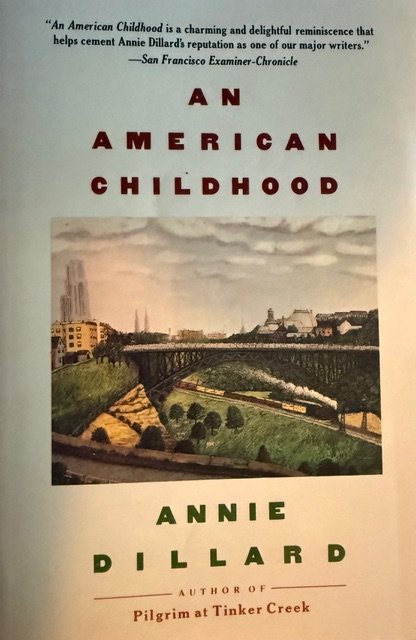
During those long days, I read episodes to him from his book as well as from Annie Dillard’s An American Childhood. When hospital psychosis set in and the ceiling became a movie conjured up in his mind, Kit may well have revisited Palo Alto as a five-year-old and memories etched in his mind of fragrant orange blossoms and a dangerous storm water channel where he could have been swept away by raging water filled with storm debris.
For hours while he was in the ICU, we listened to ambient white noise and watched scenes of earthrise in locations around the world, captured and replayed on a Blue Marvel channel on his TV monitor. Together we traveled the world, observing a colony of penguins in Patagonia, and polar bears with massive feet napping on mounds of frozen kelp on fields of blue ice. Heidi and I held his bruised hands, stroked his head, and scratched his moustache under a feeding tube in his nose that delivered needed water and nutrition until he could once again swallow on his own.
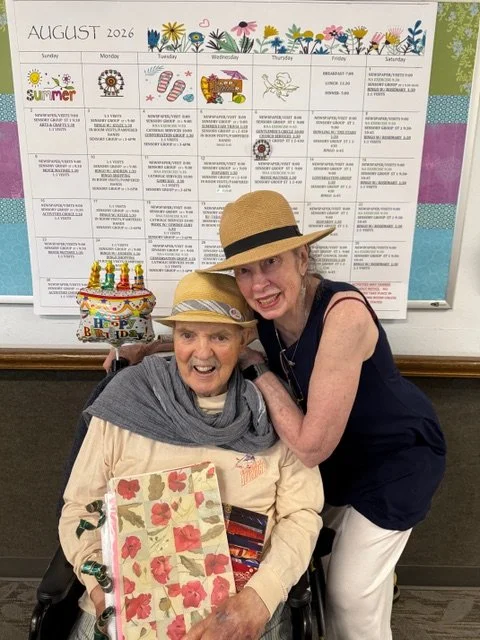
Through it all, Kit’s inner light refused to stop burning. Today, at 88, that same indominable spirit is still alive, even as life’s challenges continue to come his way. We loved Annie Dillard’s free-spirited body memoirs that we often revisited and shared. And had they ever met, she would have recognized Kit as a kindred spirit.