The Immortal Henrietta Lacks
I have a faint scar on the upper part of my left arm, and as is often the case with scars, it has a complicated backstory. It was etched on my ten-year-old bicep in 1955 when I received my first polio vaccination along with all of the children in my elementary school. Perhaps it saved my life and prevented me from spending years imprisoned in an oxygen lung. I believe that it did, and for that I will be forever grateful for the woman whose legacy made it possible. This is her story as related by two writers who brought her name to light.
In the obituary archives of the New York Times, there is a weekly newsletter on women, gender and society written and edited by Adell Hassan. One of the newsletters focused on “overlooked” women and told the story of Henrietta Lacks (1920-1951). A woman of color, Lacks died at the age of 31 on Oct. 4, 1951, from an aggressive cervical cancer.
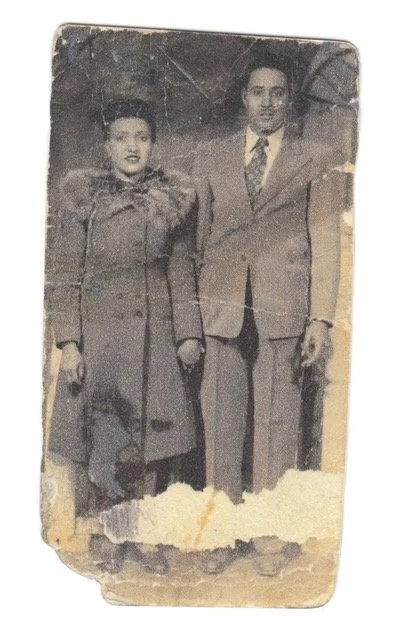
Raised in Clover, VA, she was the great-great-granddaughter of a former slave and tobacco farmer before moving to Baltimore when she was 21 with her husband David. After the birth of her fifth child, Henrietta found herself back in the segregated “colored” ward of Baltimore’s Johns Hopkins Hospital in January 1951, with what she described as a knot on her womb. When a hard mass was found in her cervix, a small piece of the cancerous tissue was cut off without her permission, and her gynecologist Dr. George Gey had it sent to the pathology lab for a diagnosis.
Unlike most cancer cells, which died within a few days, a cluster of Lacks’ cells not only survived, but thrived, doubling within 24 hours and never stopping. Gey later told others that the cells were taken from a woman named “Helen Lane,” thus relegating Lacks to obscurity. Ten months after coming in, Henrietta died, and a lab technician was in an autopsy room, taking more of the precious cells from her body to be used for medical research.
As a result, part of her remained alive and at the forefront of science. Her cell line, HeLa (pronounced hee-lah), has been at the core of treatments for hemophilia, herpes, influenza, leukemia, and Parkinson’s disease as well as the polio vaccine, the cancer drug tamoxifen, Covid vaccine, chemotherapy, gene mapping, and in vitro fertilization. The trillions of those “immortal” cells taken from her body are labeled in university labs and biotechnology companies across the world. To this day, HeLa cells remain the most prolific and widely used human cell line in biology.
Henrietta had no obituary and was buried in an unmarked grave. It was decades before the Lacks family learned that her cells were alive. Her children and grandchildren received no compensation from the billions of dollars in profits and patents generated by pharmaceutical giants that used their Henrietta’s cells without her knowledge, and they struggled to get healthcare coverage themselves.
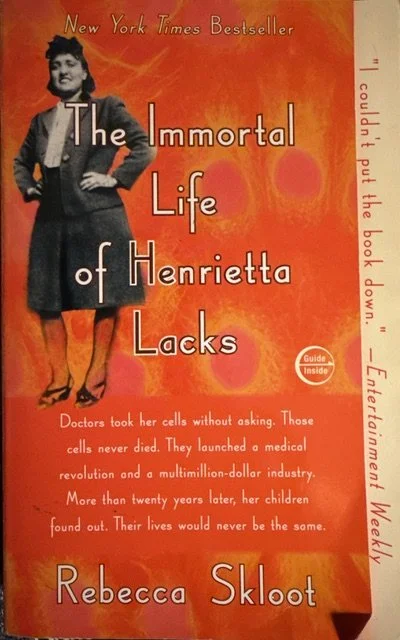
In 1973, one of Lacks’ daughters-in-law had dinner with a friend whose husband happened to be a cancer researcher and had recognized the Lacks name. He was working with cells from a woman named Henrietta Lacks and asked if she had died of cervical cancer. As recounted in science writer Rebecca Skloot’s book The Immortal Life of Henrietta Lacks, Henrietta’s daughter-in-law then rushed home and told her husband Lawrence, “Part of your mother, it’s alive!”
Skloot had first learned about Henrietta Lacks and her immortal cells in a biology class, at the age of 16, and spent a decade researching HeLa cells. In telling Henrietta’s story, Skloot reveals a dark history of distrust that is connected to experimentation done on African Americans. Issues of race, class, gender, medicine, bioethics, and intellectual property are explored in her compelling story of the interaction of science and human lives.
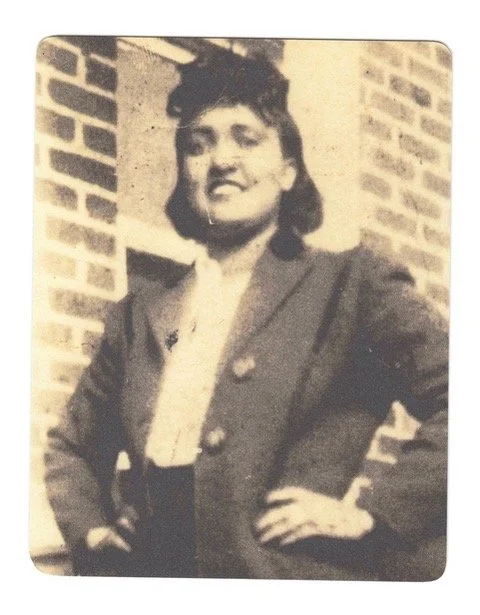
Skloot begins The Immortal Life of Henrietta Lacks with the words, “There is a photograph on my wall of a woman I’ve never met.” Featured on the author’s book cover, the photograph captures Henrietta with a hand on one hip, her beautiful face looking squarely at you with assurance and a touch of sassy attitude. She’s dressed to the nines, ready to step out, go dancing, and marry the cousin she grew up with in Clover, VA—the man who fathered the five children she would not live long enough to see grow up.
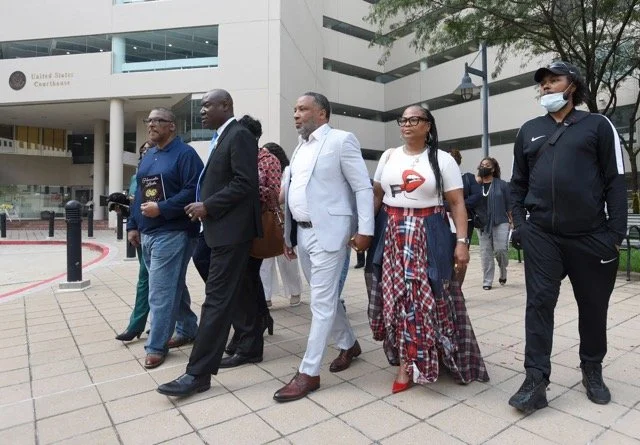
The arc of racial justice has been long in arriving for the Lacks family; but this month, they joined their lawyer at the Federal Courthouse in Baltimore and made an historic announcement. The Lacks family reached a confidential settlement with pharmaceutical giant Novartis which made billions of dollars in profits and patents from Henrietta’s immortal cells without ever compensating the Lacks’ estate. Three years ago, the Lacks family reached a separate settlement with Thermo Fisher Scientific, and other lawsuits against biotech and pharmaceutical companies remain pending.
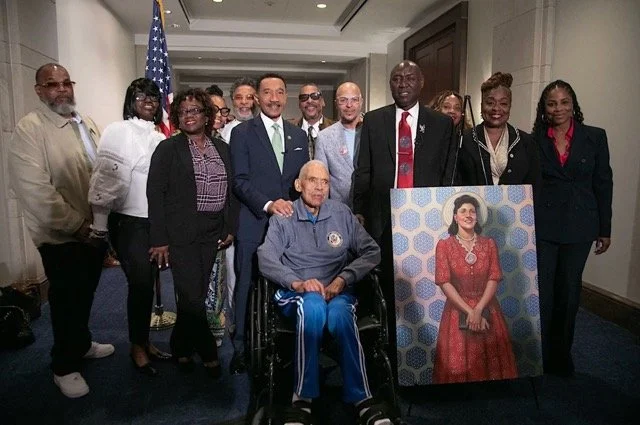
No longer “overlooked,” Henrietta Lacks’s story shines light on a chapter of America’s complicated medical and racial past, and the still visible scar on my arm is a part of that story.