Snapshots from Cuba
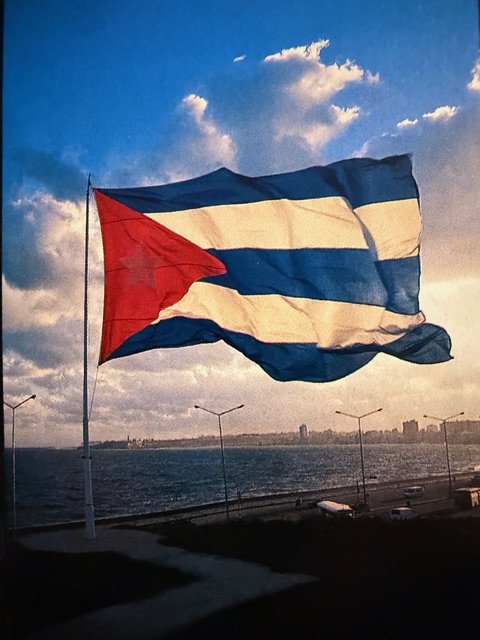
In 1992, the balance of power in the world shifted. For thirty years, 80% of Cuba’s trade had been with the Soviet Union and its allies. With the collapse of Communism, trade with Cuba dried up and a dark period referred to by Fidel Castro’s government as a “Special Period in Time of Peace” began. Cubans experienced power outages, food shortages, rationing, malnutrition, a severe decline in GNP, and an increase in black market activity.
In the decade that followed, Cuba saw the beginnings of free market activity, along with some allowable private agricultural activity. Though the Cuban government opened up to investment and tourism from abroad, the 1996 Helm-Burton Act discouraged investment there and Cuba remained largely out of bounds for Americans as a travel destination.
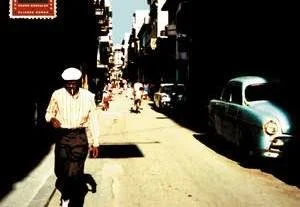
In 1997, my images of Cuba as a place and people were changed forever. While visiting friends in Los Angeles, Kit and I saw The Buena Vista Social Club, a film produced by Ry Cooder in Havana. In this poignantly beautiful documentary, Cuban musicians who were then in their 70s and 80s recreate the Havana of another era in song, walking us through a city that had not had a fresh coat of paint in 40 years. I knew at that moment that I wanted to walk those same streets off limits to most American tourists since the 1959 Cuban Revolution and the Cuban Missile Crisis.
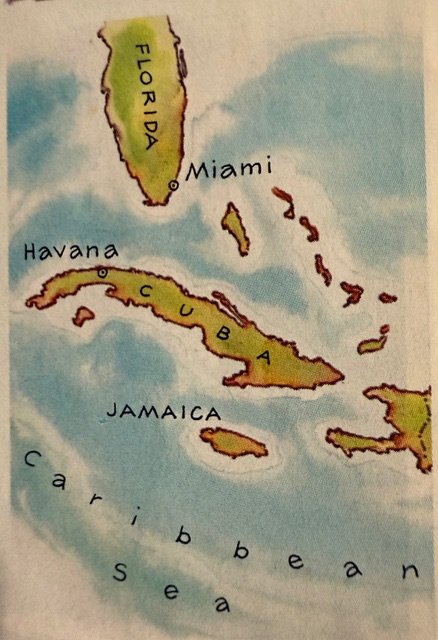
By 2003, American journalists were allowed to travel to Cuba. When our Missouri friends Hank Waters and Vicki Russell—owner and publisher of the Columbia Daily Tribune where I was a columnist—invited us to join them on their boat The Missouri Traveler that spring and travel from Key West to Havana, the decision was easy. Before we knew it, we were anchored in Cuba’s Hemingway Marina and I was busy filling my journal with snapshots that formed a collage of people, sights, sounds, smells, scenes and conversations that together sang out “Havana.” Here are a few snapshots from that visit twenty-three years ago—
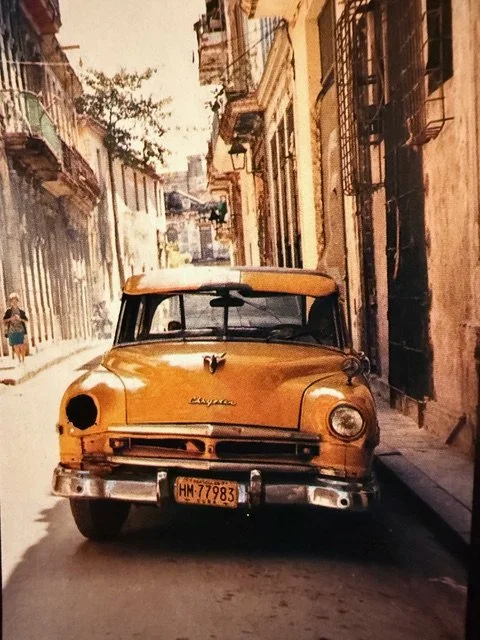
“The streets of the city’s oldest sector are once again alive with tourists in search of a window on Havana’s colorful past. Horse buggies, three-wheeled yellow Coco taxis, and flashy vintage American cars from the 1950s line the bustling streets in front of major hotels and at tourist hubs, vying for a share of US dollars—the currency of tourism, today’s main growth industry in Cuba.
Cubans who live and work in Old Havana walk or ride crowded, hot pink “camel” buses shaped like a strung-out letter Z turned upside down.”
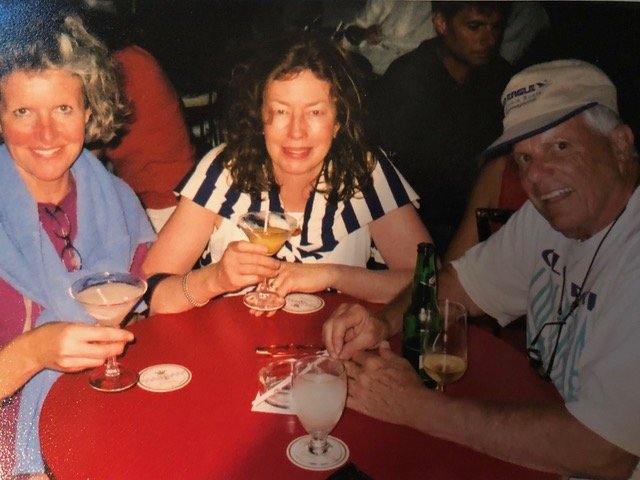
My snapshots included a visit to the Floridita, Hemingway’s favorite bar near our hotel, for a celebratory mojito. Another snapshot recorded on a walk along Habana Central, the urban neighborhood directly west of Old Havana where there are few hotels or restaurants catering to tourists—one that provided a window on everyday urban life as most Cubans experienced it then.
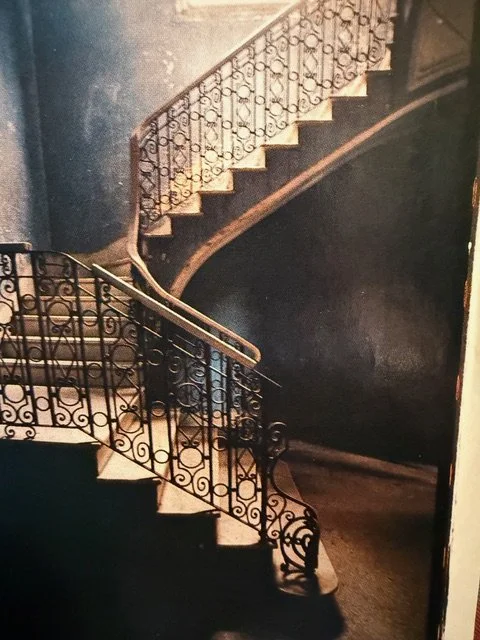
“We walked along busy Calle Neptuno where assorted dramas played out on cracked sidewalks and at the edges of the narrow street itself. Exposed wires and electrical power boxes inside dark stairwells of residential buildings explain why so much life takes place outside on Havana’s streets. For much of the day and into the evening, children use the sidewalks and streets as their playground. Groups of men collect in parks, at street corners, and under the hoods of old cars perpetually in need of repair. Women with string shopping bags walk to local markets for produce and their allotted ration of rice. The concept of supermarkets and a chicken in every pot simply does not exist in Havana at the beginning of the twenty-first century.”
Now fast forward to August 2026 when two American NYT journalists and a photographer—the first to be granted visas in nearly eight years—recently spent a week in Cuba. The journalists reported on July 27th that after President Trump took control of Venezuela’s oil which had been Cuba’s lifeline, he imposed an oil blockade on Cuba that led to its worst ever energy crisis with daily blackouts and predicted it would soon collapse. Now six months later, the resilient Cuban government and people are doing what they do best: adapting.
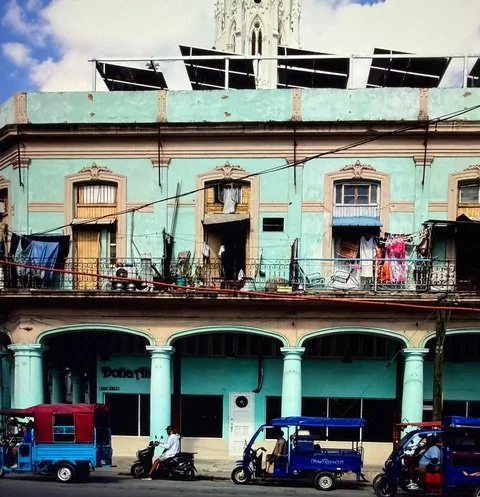
“They are swapping their gas-guzzling 1950s American cars for electric motorcycles and rickshaws from China; importing hefty lithium batteries to keep televisions and fans running through blackouts; jury-rigging generators to run on more accessible natural gas; and installing solar panels on rooftops and even vehicles. Together, the workarounds amount to a new Cuban energy grid—this one more in the hands of the Cuban people, propping up society with the electricity off and fuel lines dry. These solutions have enabled the Cuban government to ration scarce power and fuel...in an effort to withstand Washington’s intense pressure campaign.”
“Today,” the journalist reported, “Electric rickshaws ferry people to work. Solar panels have kept stores open, and people charge their phones and lanterns off their neighbor’s battery or generator at work. In one neighborhood, we saw a few families with a generator set up a television in the street so children could watch cartoons.”
As Kit and I learned from our trip to Cuba in 2003, the Cuban people are masters at adapting during a crisis. They’ve been figuring things out their whole lives, and much of mine.