Paris 1992: Day 3
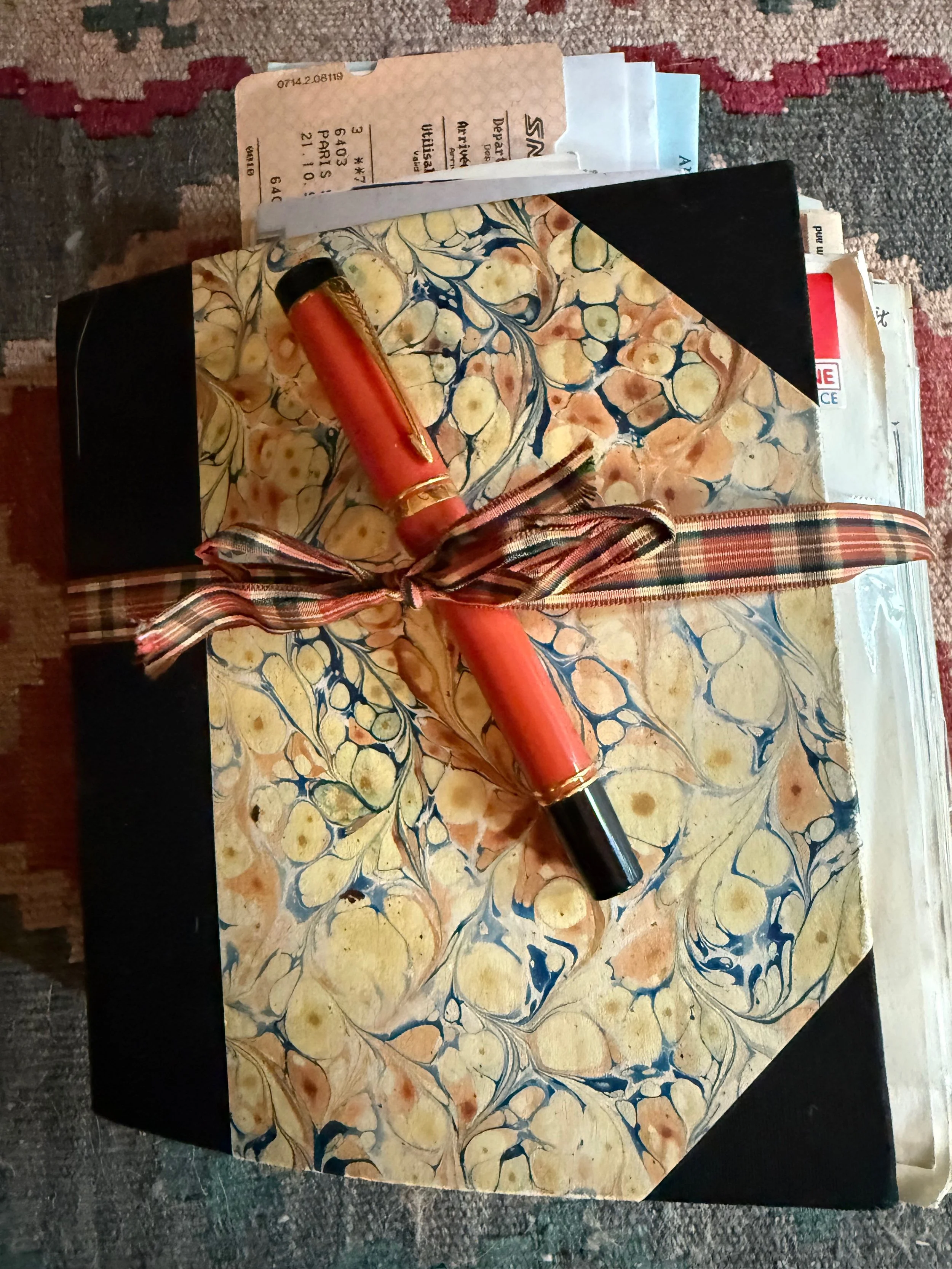
On the third day of our Paris adventure in October 1992, Kit and I walked from our apartment on Rue de Saintonge down Rue St. Martin near the Pompidou Center that we had visited the prior day. Kit was on a mission. The day before, he had spotted un magasin de papeterie (stationary shop) as we left the Pompidou Center. Winding our way back there a day later, he popped into the stationary store and bought a lovely French journal that he gave to me the following day on my 47th birthday.
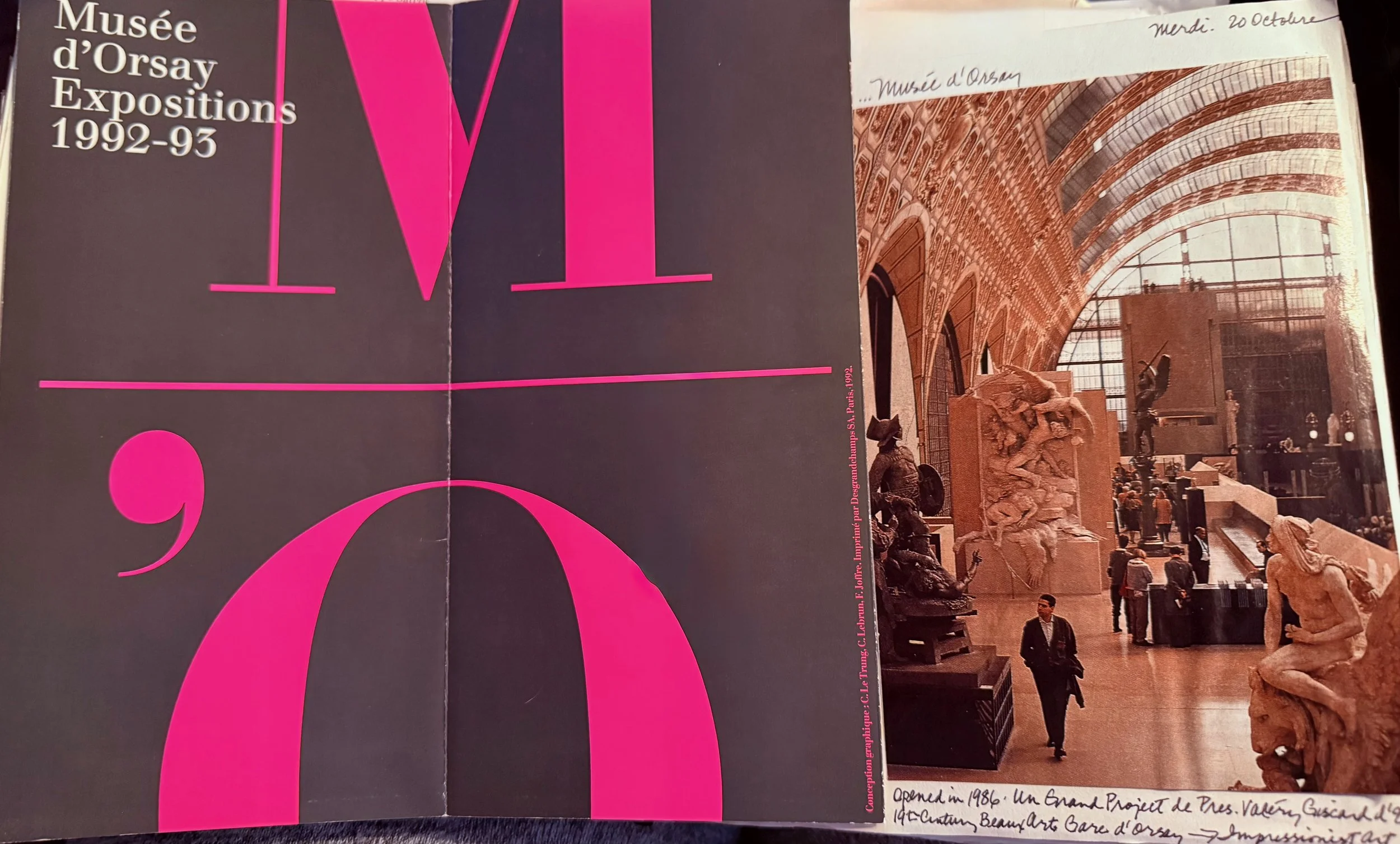
As I peruse that Paris journal now two months after my 80th birthday, I am reminded of October 20, 1992, and the wonderful day we spent exploring the Musée d’Orsay and the Louvre. After Kit’s morning detour to the stationary shop, we walked along Quai du Louvre above the Seine River to the Pont Royal—one of the city’s many bridges. There we had our first view of what had once been the 19th century Beaux Art Gare d’Orsay train station. Opened in 1986, it was beautifully transformed into a museum referred to as M’O—un grand projet of French President Valéry Giscard d’Estaing—to house art from the period 1910 to 1950 that had been stored in the Louvre’s cellars for ages. The M’O is utterly magnifique, and remains my favorite museum of all in Paris.
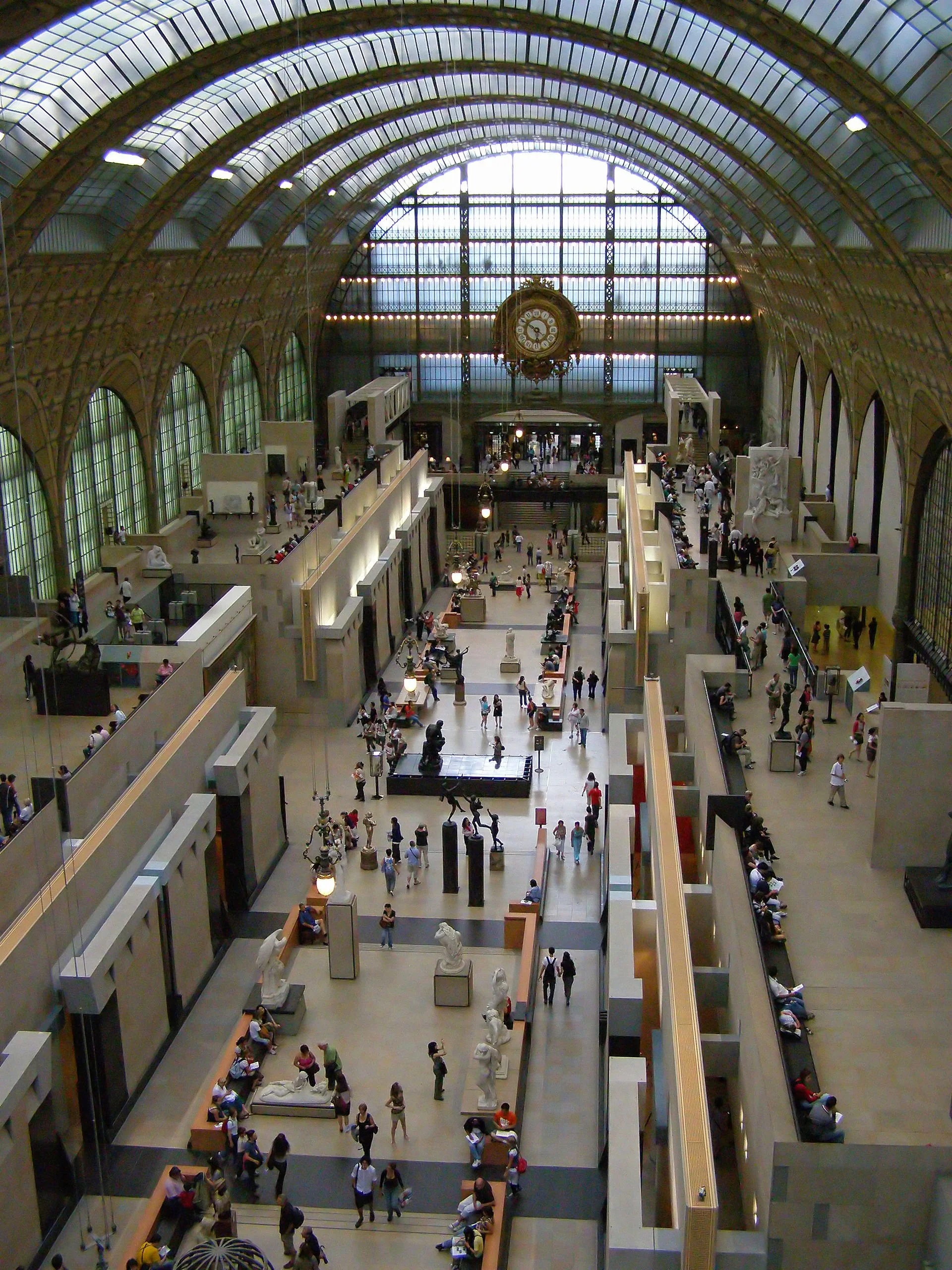
After lunch at a café inside the museum with a menu for art lovers and a tour of the gorgeous collection of impressionist art, it was marche, marche, marche on to the Louvre. From the Musée d’Orsay, we walked back across the Pont Royal to Quai des Tuileries and Quai du Louvre. Along the bridge, we stopped to watch les bateaux Parisiens cruise boats on the Seine River and take in the warm fall colors of the trees along the quai (dock).
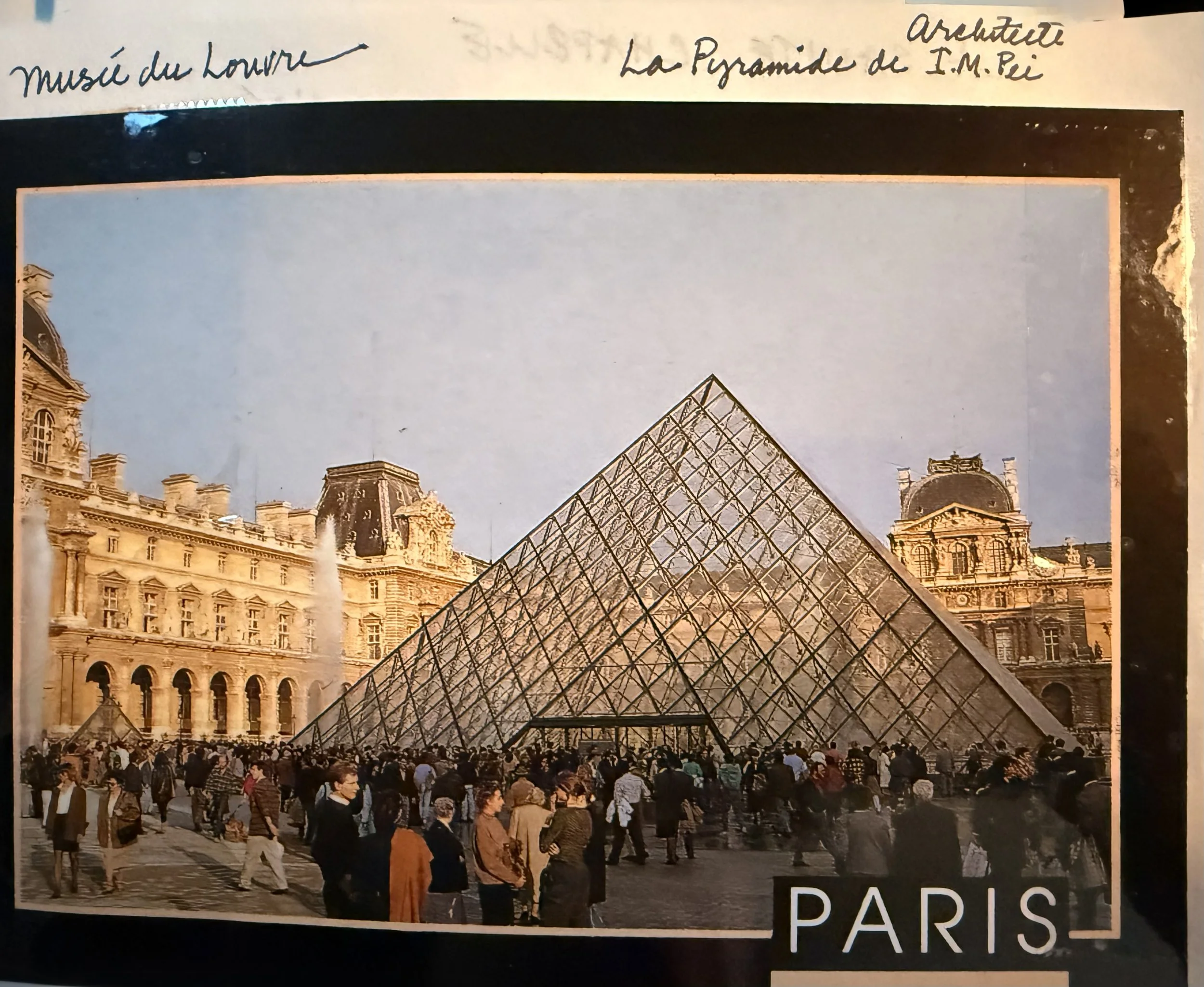
The scale of the grand Louvre museum complex is truly daunting. How we wondered would we ever have time to explore it all? Une tâche impossible! So on that day, we focused on viewing its exterior architecture and architect I. M. Pei’s iconic Pyramid in the Louvre’s courtyard, allowing ourselves to feel the grand space before entering the galleries. We would return later that week to begin an exploration of the great halls, but for now, it was on to “the Passageways.”
My journal continues, “All of Paris is not just les grand projets,” referring to President François Mitterrand’s iconic Paris projects like the Louvre’s Pyramid, Musée d’Orsay, the Grande Arche, and Bibliothèque Nationale symbolizing France’s modernity.
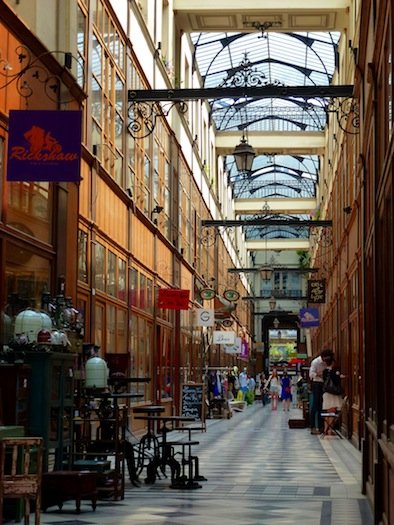
Later that afternoon, we found a charming little passageway tucked into the financial and commercial neighborhoods of the Rive Droit (Right Bank)—one of the covered commercial galleries built during the early 19th century. At the Passage Colbert near the Bibliothèque Nationale, we had a grand crème at a tiny café table off the beaten path of most tourist routes. It was a quiet and elegant space with black and white tiled floors and arched glass ceiling. Vraiment, our stop there was a magical passage back into an earlier century in the city’s history.
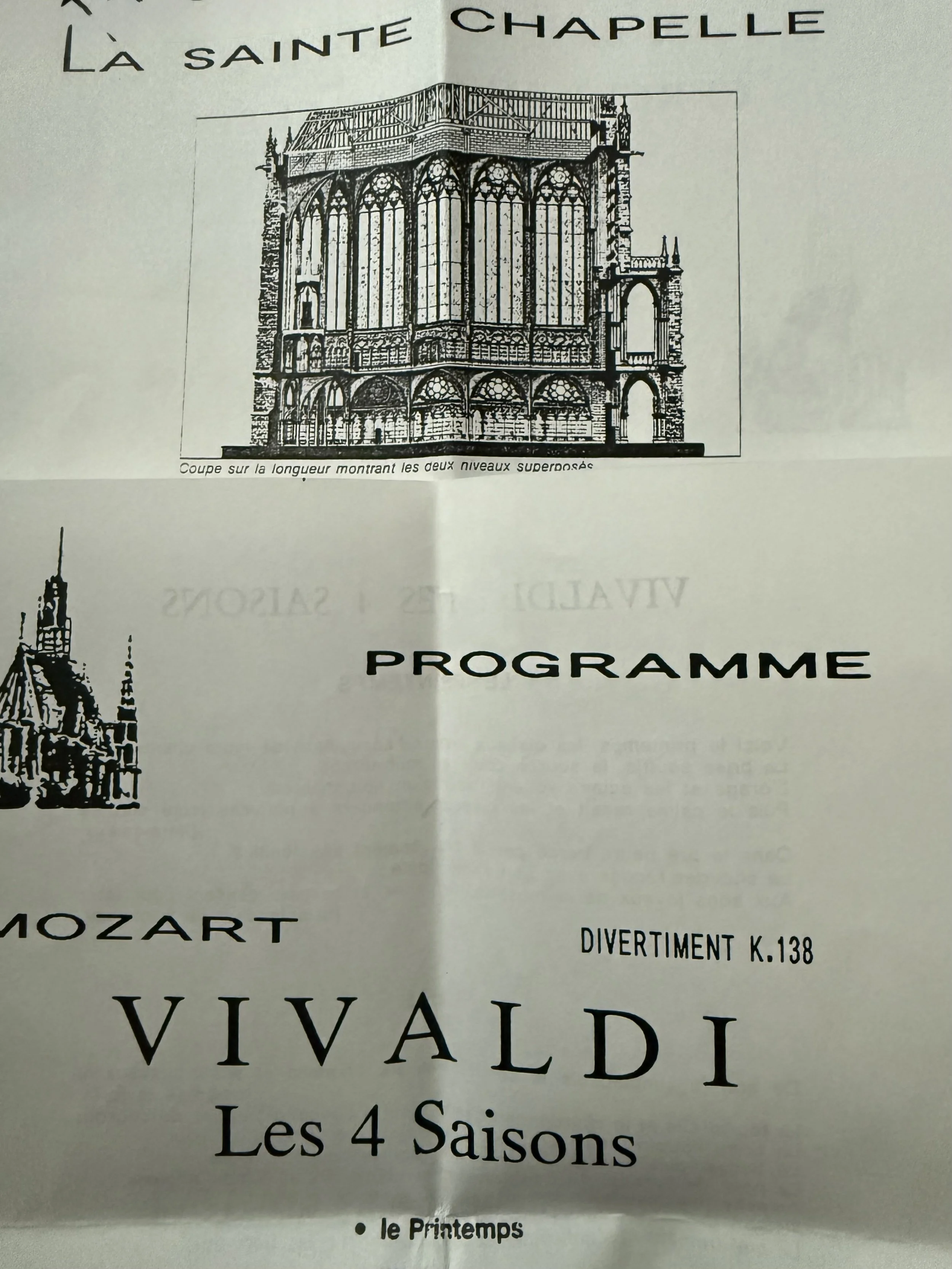
That night the two of us took our now familiar bus # 96 to the Ile de la Cité near Notre-Dame for a Vivaldi concert of Les 4 Saisons (The 4 Seasons) performed in la Sainte Chapelle cathedral. But first, a light tartaine dinêr avec pain et fromages and a glass of vin blanc at a charming wine bar—Le Bar du Caveau at 17 Place Dauphine.
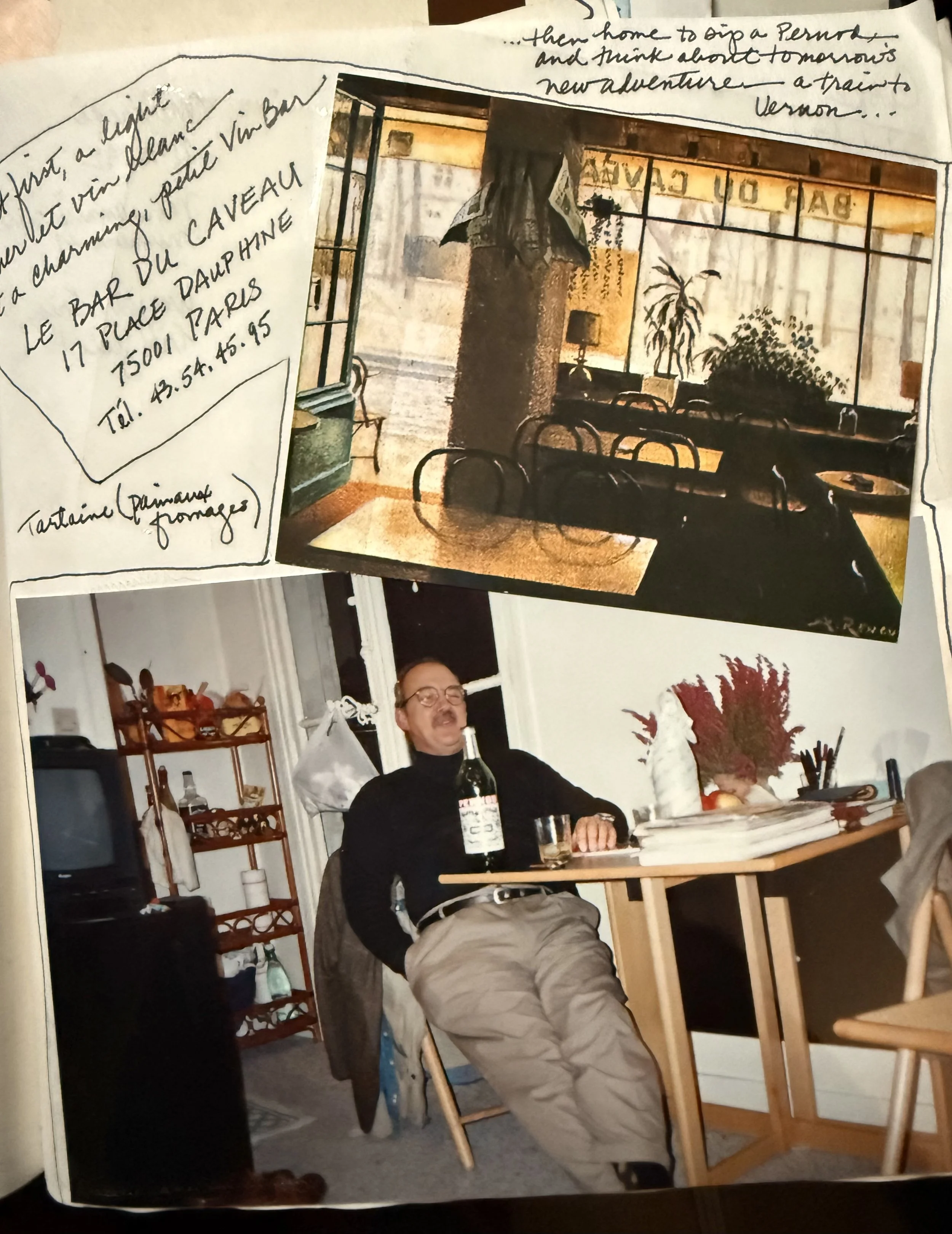
Following the concert, we strolled home to our apartment on Rue Saintange and sipped un petit verre de Pernod (an anise-flavored liqueur). It was time to think about tomorrow’s grand adventure—a train trip to Vernon to visit artist Claude Monet’s home in the village of Giverny.
(To be continued next week….)