A Walk in Monet’s World
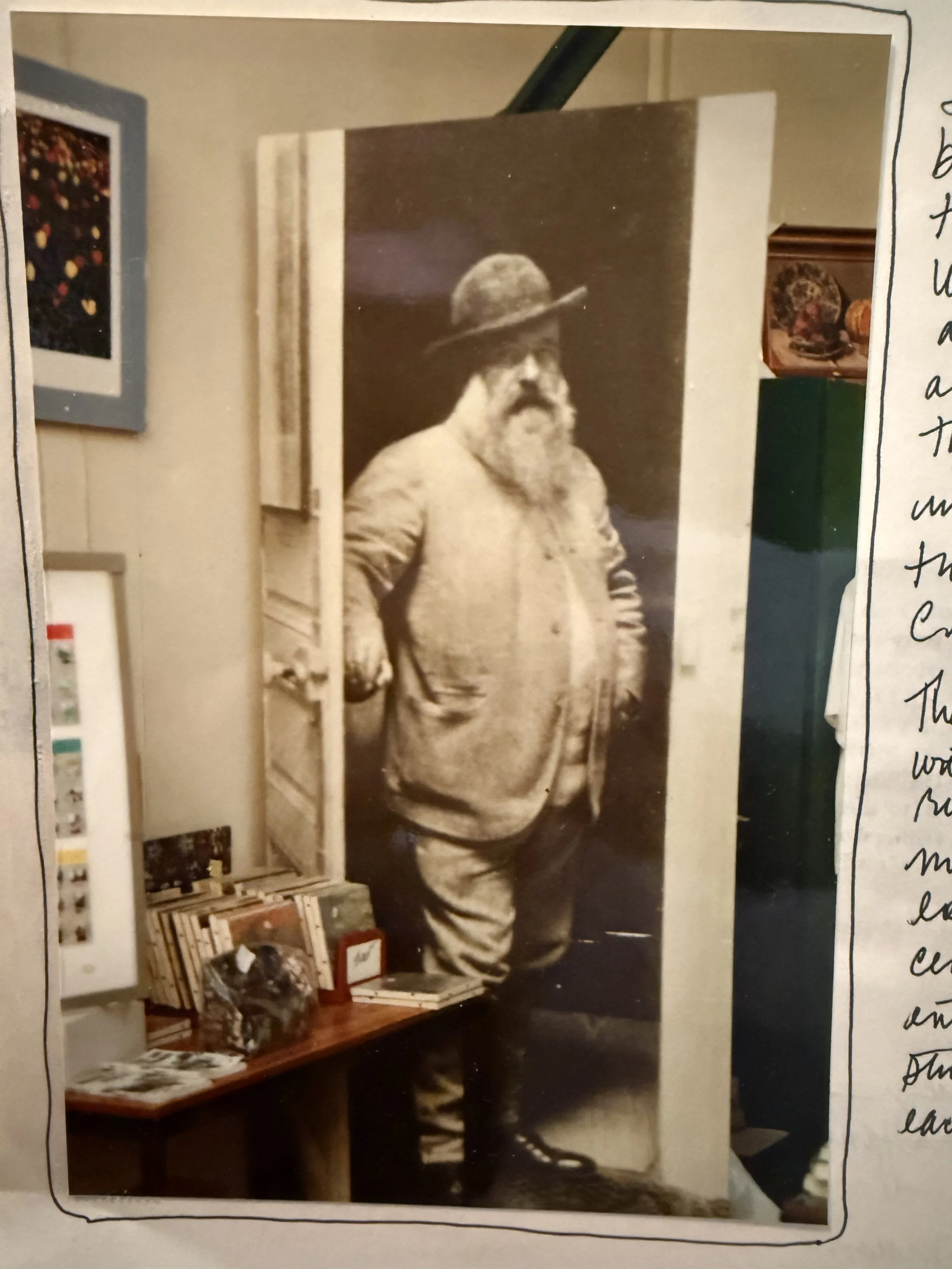
Dear Readers…. I have finally arrived in Monet’s world on the pages of my 1992 Paris Journal. After walking from the Vernon train station to the village of Giverny in last week’s blog, Kit and I found ourselves in a room that was artist Claude Monet’s studio. There he stood in a life-sized photograph with hat and rumpled coat, much as he did a century ago as he entered his studio to paint each day. Monet painted in the morning, stopping religiously for a lunch at 11 a.m. This was the big meal of the day frequently enjoyed al fresco, one that included the artist and his wife Alice’s combined families as well as artists who flocked to Giverny to meet the Father of Impressionism in his world of gardens and light.
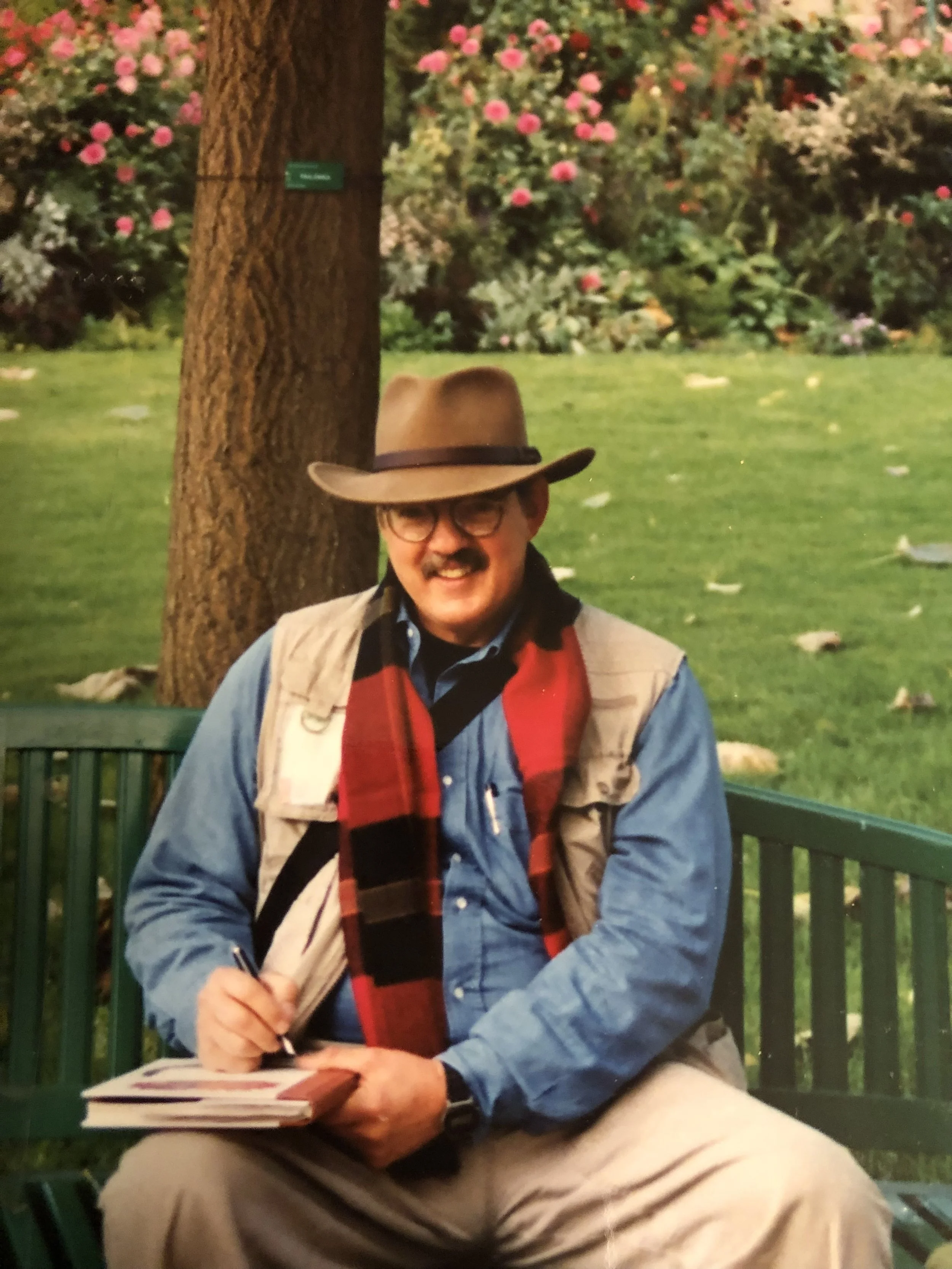
After exiting his studio, we entered immediately found ourselves in les jardins de C. Monet. Kit found an inviting green bench and took out a journal he’d brought along with him. This was a spot that said “Sit. Be still, be peaceful, and when you are so moved…write.” I left him there for an hour while I walked the rows of Monet’s flower beds that faced the house, not quite believing I was really there. Rue C. Monet that we had just walked along on our way to Maison # 25 seemed to disappear, and I imagined myself in the countryside and not just a high stone wall away from the village itself.
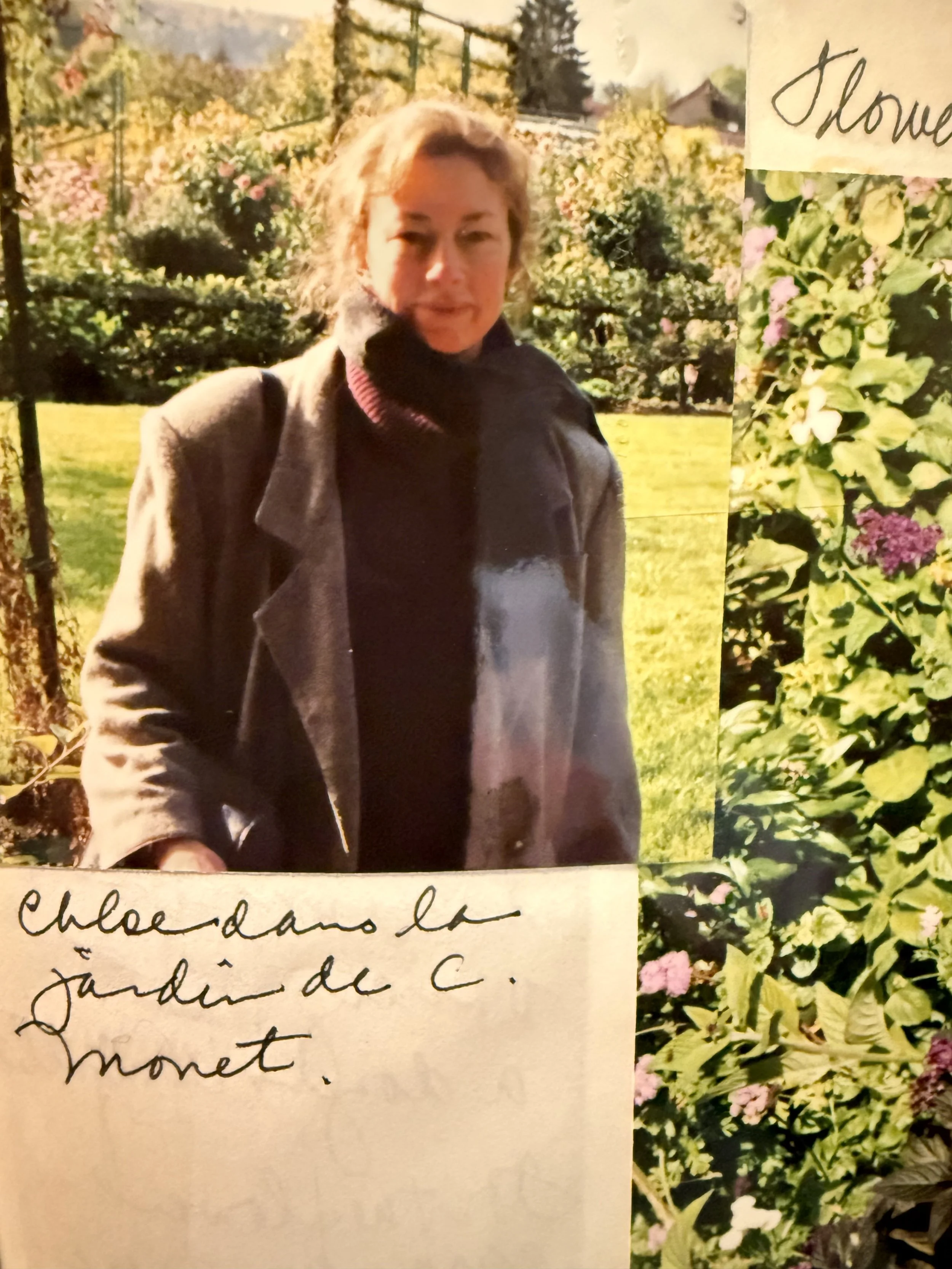
In October, Monet’s gardens are a quiet place with few tourists. So few in fact that I was virtually alone for the next hour. Late fall flowers were in bloom, unexpected and a delight. Tall stands of irises had no blooms, but their distinctive pointed leaves suggested what would come in the spring. In my mind’s eye, I imagined them in bloom as they are in his paintings, lining the pebble pathway that leads to the family’s distinctive home with its green shutters and petal pink stucco walls with seams sealed by creeping vines.
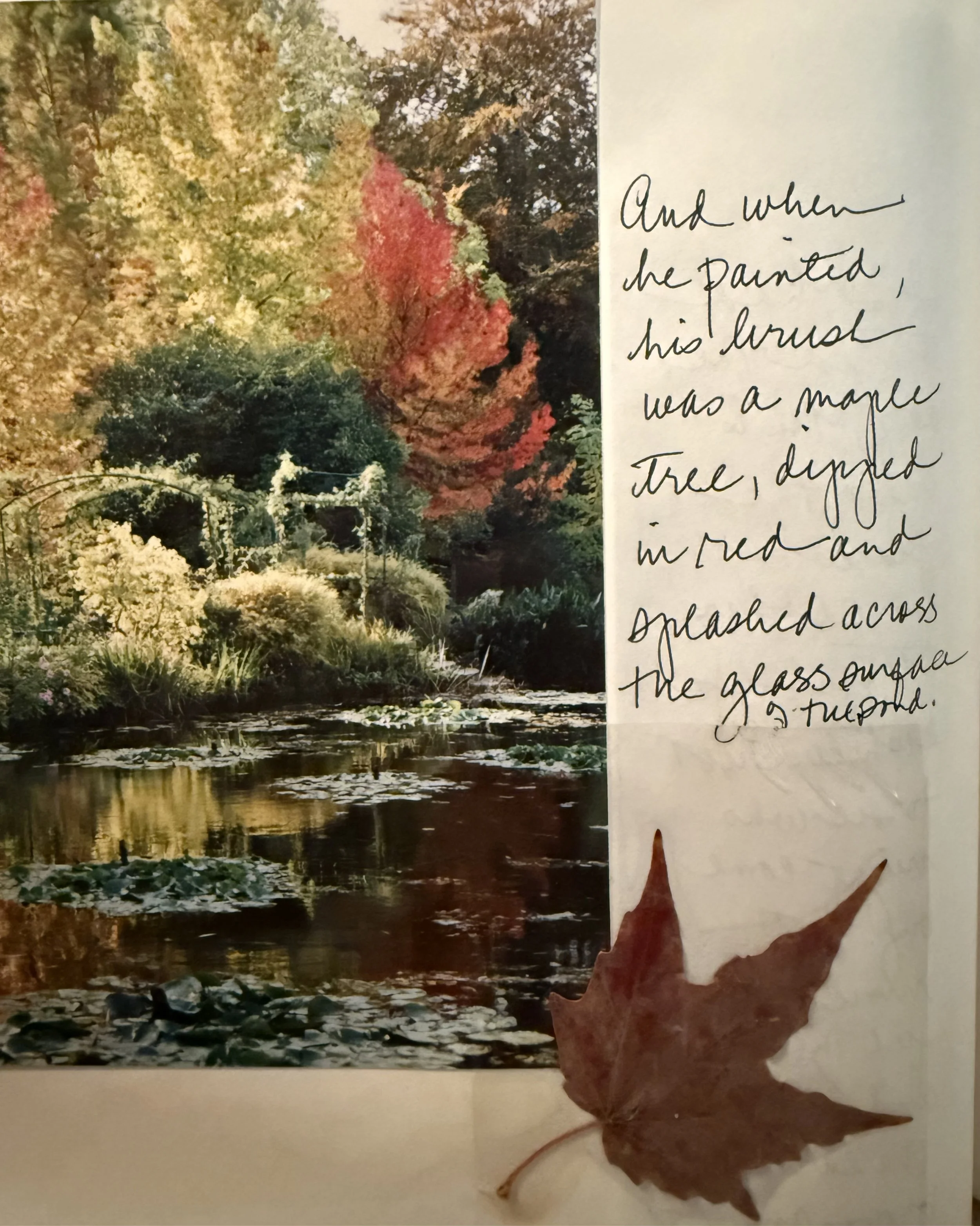
While Kit sat writing, I wandered in search of his famous Jardin d’Eau (water garden) with its iconic teal green bridges, boat, and pond. At the far edge of the gardens, I found a sign on a stone wall with arrows pointing downward to a tunnel passageway under a narrow road that passes between the house and its flower gardens and Monet’s breathtaking water garden. Emerging from the tunnel, light played in the trees along a path leading me to the pond, catching fire in the yellowing leaves of an autumn maple. Like Monet’s paints, the pathways flow. You can’t get lost.
Before long, a teal green bridge connects you to the water garden’s graceful tree-lined pond. Each bridge and bench placed around the pond invites visitors to pause for reflection. When he painted, Monet’s brush was a maple tree, dipped in red and splashed across the surface of the water. A green boat tucked under a wispy willow branch appeared to move by its own power. I could imagine elegant ladies visiting Monet’s world a century ago stepping into the boat in their long white dresses, rowing across the pond effortlessly, collecting liquid amber leaves like fallen stars floating in the water’s reflection.
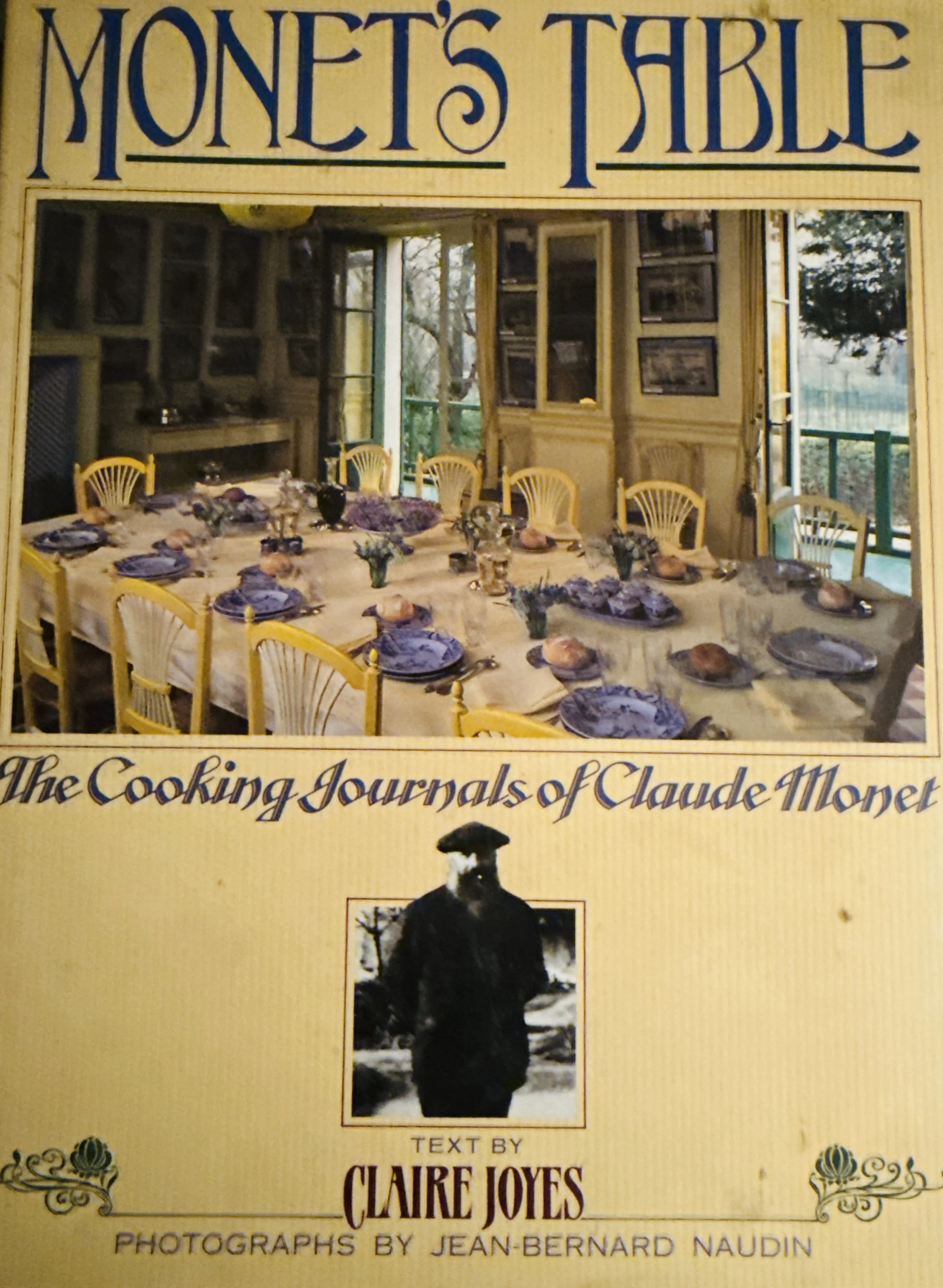
Returning to the bench where I’d left Kit an hour earlier, I found him in conversation with Maxine Martell—a tall, elegant woman our age who was traveling alone. She and I had passed one another in the tunnel leading to the Jardin d’Eau, but we’d only nodded and continued on our way. For the remainder of the day, we moved as a trio, enjoying each other’s company. Before leaving the grounds, we toured Monet and Alice’s home, each room painted a bold primary color. Most memorable was their yellow dining room lined with Japanese prints and a table set with Limoges plates rimmed in yellow and blue. And just as beautiful was the family’s spacious kitchen with copper pots on shelves, a blue kitchen table, blue and white checkered curtains on the window, and blue and white ceramic tiles on the backsplash wall next to the stove and open fireplace where family meals were prepared daily.
Late that afternoon, we took the train from Vernon back to Paris with Maxine and invited her to join our son Hayden and us for my celebratory birthday dinner that evening. She was an artist seeing France and Italy for the first time, just as we were seeing Paris and Monet’s world for the first time. We sensed that the experience we shared in Monet’s world and our conversation during our return train ride to Paris would continue for years to come.
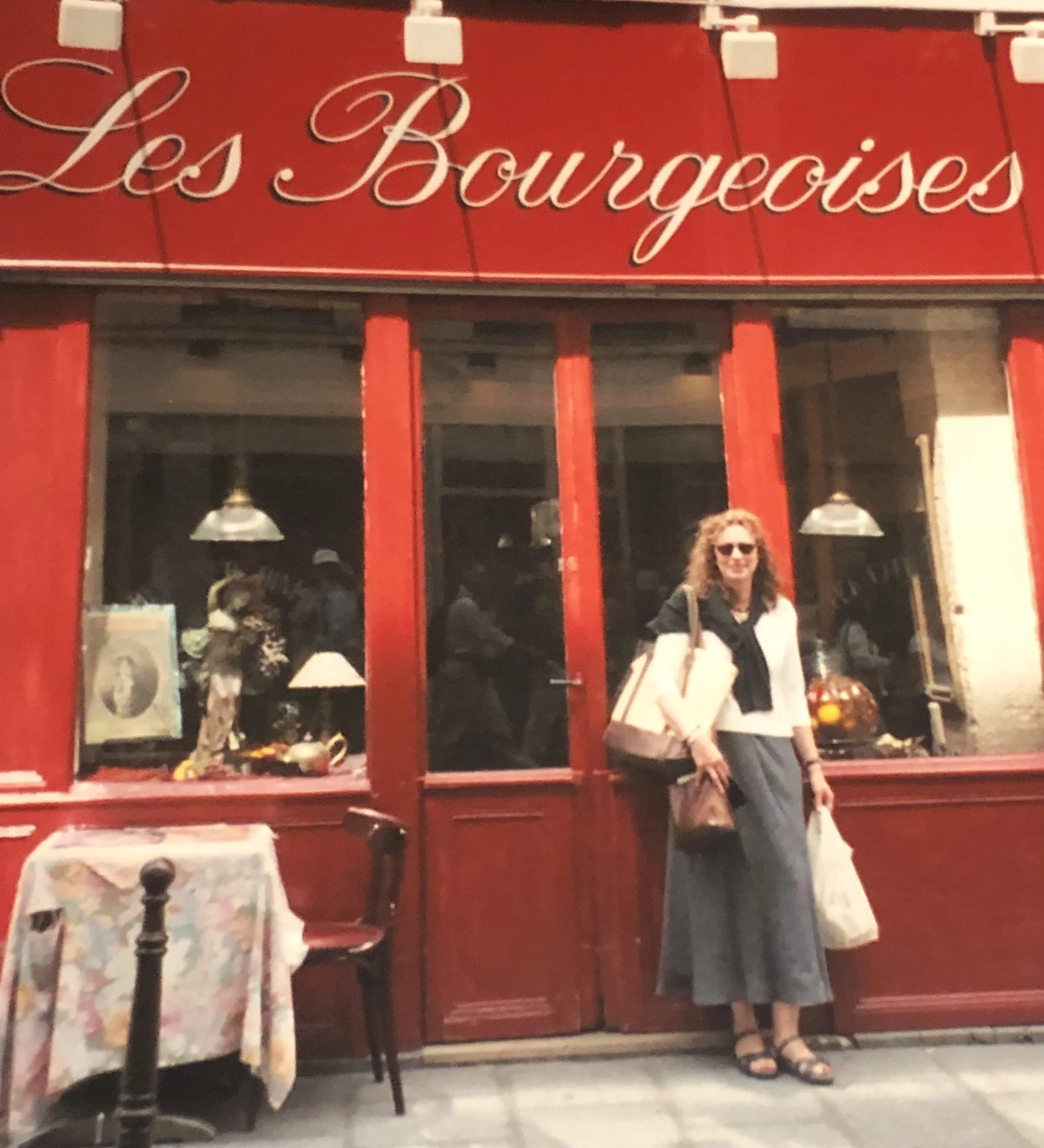
My 47th birthday dinner that night was extraordinary. The four of us dined in a restaurant that Monet and his wife Alice would have loved. Les Bourgeois on rue des Francs Bourgeois had only six or so tables, each decorated with a pastel pink table cloth and a tiny lamp. We toasted the day and my birthday with bottles of Domaine Tempier 1986 Bandol wine.
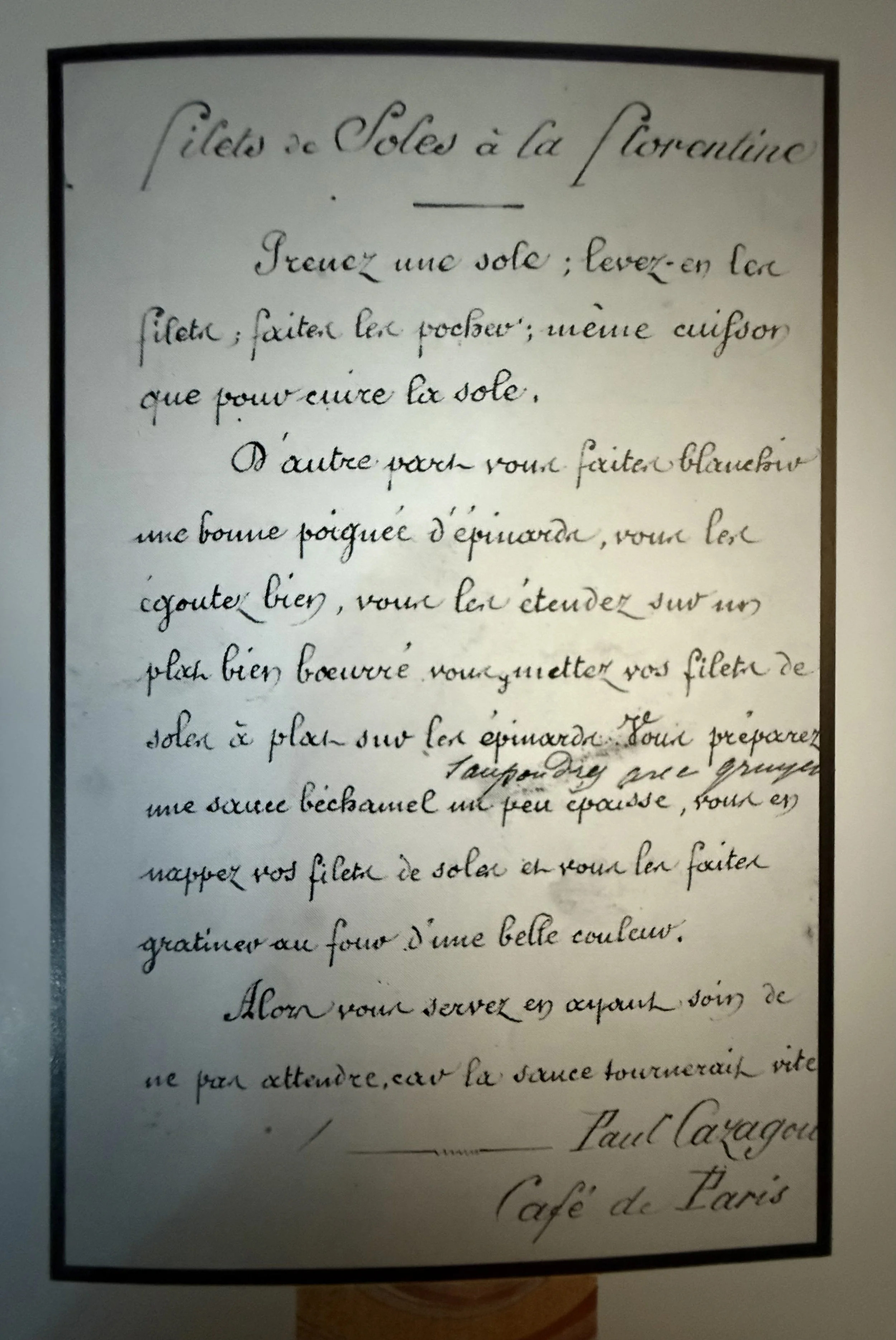
How fitting that when in Paris a century earlier, Claude and Alice loved to try out new recipes at their favorite restaurants. After compliments to the chef, recipes were copied onto napkins and brought home to their kitchen in Giverny. And while I did not record what I ordered that delicious night in my Paris journal, I have never forgotten the magic of that glorious day—October 21, 1992.